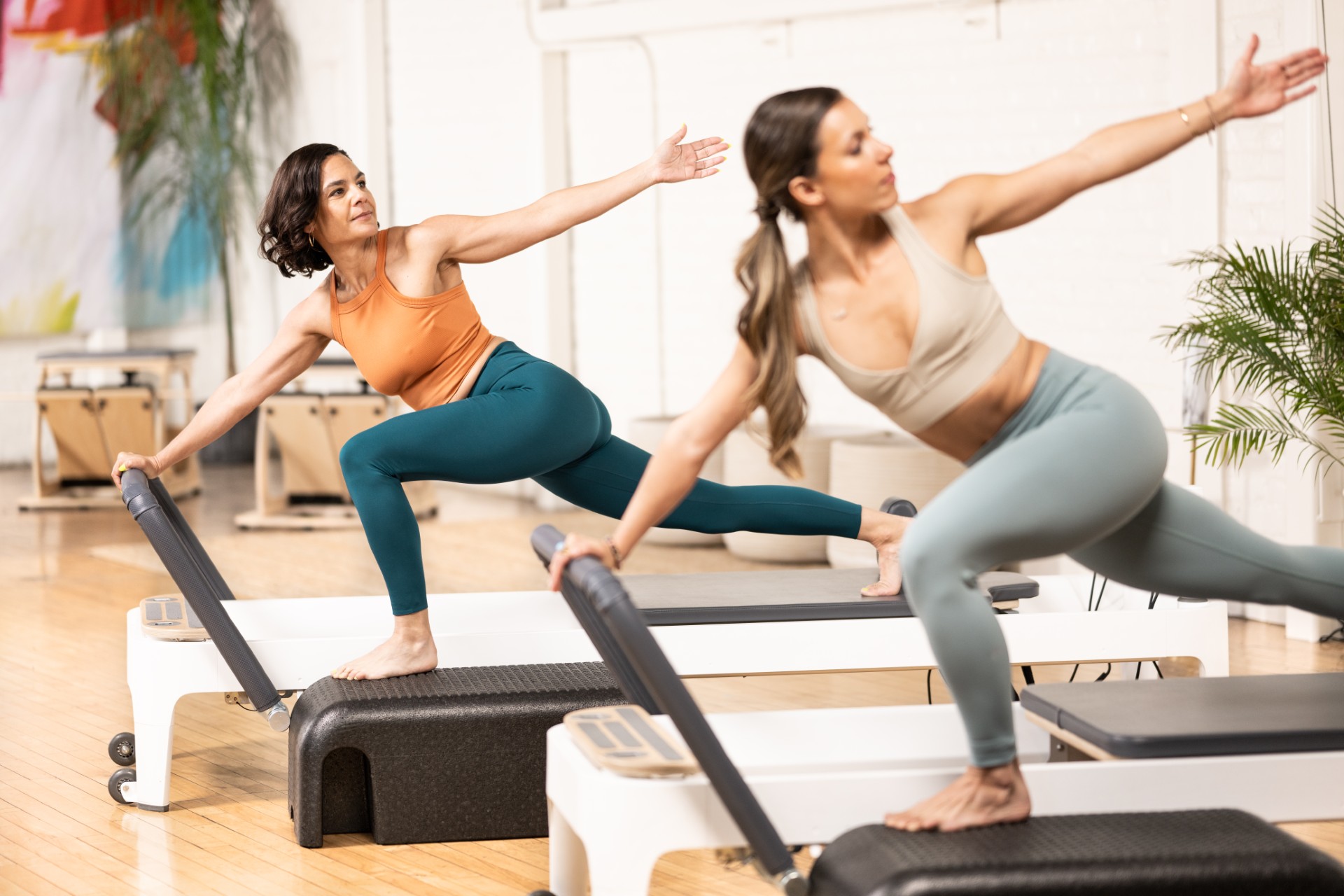
If you're wondering how to prepare for your first Pilates class, the good news is simple: you don't need to be flexible, athletic, or know the names of the exercises beforehand. All you need is comfortable clothes, a few basic skills, and a desire to learn how to move better. Pilates training rewards precision, calm breathing, and body awareness, not spectacular performance. That's why the first class is suitable for both active exercisers and those returning to exercise after a break.
Good preparation reduces tension and helps you get more out of your workout right from the start. When your body isn't fighting stress, deep muscles are activated more easily, breathing is freer, and new movements are learned more quickly. That's why the first class can change more than the leisurely pace suggests. Often, it all starts with small movements and ends with a feeling of a lighter body.
Why do the first few Pilates classes look different than a regular fitness workout?
Many people expect a fast pace, heavy breathing and a high heart rate. The first Pilates classes often surprise with their calmness. The instructor may pay attention to the position of the pelvis, the ribs, the support of the feet or the rhythm of the breathing. For those used to dynamic training, this may seem easy until they notice that the muscles are working in areas that have previously been neglected.
Pilates builds the body from the inside out. It activates deep core muscles, shoulder support, glutes and smaller muscle chains that support movement. The exercise doesn't always seem hard, but it can be neurologically demanding. The body learns new movement patterns and it requires concentration. Fatigue feels different because the work is of higher quality.
How to prepare your body the day before your first Pilates class?
It is usually not the best idea to do a heavy workout right before you start. The day before your first Pilates class, you should focus on normal movement, walking, light exercise and getting enough sleep. If your body arrives at class tired, it will be harder to understand the position and follow the instructions. Overloaded tissues will react less well to precise movement.
It's also worth taking care of hydration and a quiet evening. The nervous system learns more effectively when it's not constantly stressed. Sleep improves coordination, balance, and the ability to regulate muscle tension. The first lesson starts before you even arrive at the studio. It starts with recovery.
What to bring to your first Pilates class?
For most classes, comfortable clothing that does not restrict movement and allows the instructor to see your body alignment is sufficient. A shirt that is too loose may feel comfortable, but it makes it difficult to see the position of your spine and hips. The best choice is flexible, well-fitting clothing. Shoes are usually not needed.
It is a good idea to bring a water bottle, non-slip socks if the studio recommends them, and a small towel. It is a good idea to leave your watch, jewelry, and phone in the locker room to stay focused on your workout. The fewer distractions, the easier it is to focus on your breathing and technique. Comfort supports quality.
Before you leave, it's a good idea to check this basic list:
- comfortable exercise clothes,
- non-slip socks or regular socks according to the studio's instructions,
- drinking bottle,
- small towel,
- a hair tie if long hair interferes with movement.
What to eat before your first Pilates class?
Pilates does not require a heavy meal immediately before a workout. A full stomach can make breathing, body rotations, and comfort in lying positions difficult. Often the best solution is to have a light meal about 1,5–2 hours before class, or a small snack about an hour before if the workout is later in the day.
Good options are easily digestible foods such as yogurt, porridge, banana, light sandwich or fruit. Fatty and heavy meals should be left for later. Pilates requires concentration, and a body focused on digestion works less economically. Energy should support movement, not interfere with it.
What to expect from your first Pilates class?
The first Pilates classes often start with breathing and finding a neutral position. You may hear instructions about the ribs, the direction of the pelvis, lengthening the spine or working the shoulders. This is normal, as these factors will affect the quality of the exercise in later movements.
Then come exercises that strengthen the core, move the hips, shoulders and spine, and improve coordination. Many are surprised that small movements can be more tiring than a fast-paced workout. This shows that previously underused areas are being activated. A small movement done well can be more challenging than a large movement done carelessly.
Why can the first few Pilates classes feel difficult, even though the movements are simple?
The nervous system favors familiar patterns. When you introduce a new breathing pattern, slower rhythm, and pelvic control, the body has to build new connections to the movement. It requires energy. That's why a technical and calm exercise can be more tiring than a familiar fast-paced series.
Additionally, the work involves deep muscles that are not always strong even if the person is otherwise active. Someone can run or do strength training and still notice challenges in maintaining a neutral spine. Pilates shows the shortcomings, but constructively. The body develops where work has previously been avoided.
How to breathe during your first Pilates classes?
Many people want to breathe perfectly right from the start. That's not necessary. At first, the most important thing is to have a calm rhythm, avoid holding your breath, and gradually combine your breathing with the movement. The instructor will often tell you when to breathe in and when to breathe out, but you don't need to stress about every breath.
Breathing affects abdominal tension, rib position, and diaphragm function. When breathing becomes smooth, the body works more economically. Shoulders relax, the neck can rest, and movement becomes more controlled. This is one of the most noticeable changes, already after the first hour.
What mistakes should you avoid during your first Pilates class?
The most common mistake is trying to do everything perfectly from the first minute. Excessive pressure to perform stiffens the body and impairs learning. Another common mistake is to constantly over-tension the abdomen throughout the exercise. Excessive stiffness restricts breathing and impairs the flow of movement.
Comparison with other participants also slows down development. One has been training for months, another is coming back from a break, and the third has a sports background. Comparison doesn't speed anything up. What's important is your own technique and your own progress.
These are especially worth avoiding:
- breath holding on exertion,
- copying a movement without understanding the instructions,
- forcing range of motion despite discomfort,
- lifting the shoulders and tensing the neck,
- Assessing your own level based on one hour.
What happens to the body after the first Pilates classes?
After your first workout, you may feel muscles that have been working in the background, almost unnoticed. Often these areas are the buttocks, around the ribs, abdominal muscles, between the shoulder blades and the deeper core muscles. Mild fatigue or stiffness the next day is common and often indicates that structures that have been used less have been activated.
Many also notice better posture, a lighter walk, and calmer breathing. The fascia responds to the improved quality of movement, and the nervous system records the new positions in the hips, ribs, and shoulders. The body begins to move with less energy consumption. That's just the beginning of the process.
How often should you do Pilates after the first few classes?
The best rhythm for a beginner is one that can be maintained for a long time without overloading. For some, that means two workouts a week, for others, three shorter sessions. It is better to train regularly and moderately than to train hard for a week and stop for a long time. The body likes repetition.
If you include walking, light movement, or better ergonomics during the workday between classes, the results are often visible faster. Pilates also has an impact outside the studio because it changes the way you sit, walk, and use your body in everyday life. Regularity builds results more effectively than a single spurt.
What do you remember after your first Pilates classes?
After your first Pilates classes, it's a good idea to give your body time to adjust. Hydration, a leisurely walk, and good sleep will help you reap the benefits of the exercise. Development doesn't just happen during the workout, it also happens afterward. This is when the nervous system reinforces new movement patterns and the tissues recover.
Don't judge the entire method based on one class. The first class is meant to teach you the basics, breathing, and body alignment. Over time, your movements will become smoother, your tension will decrease, and your posture will visibly change. If after a class you feel lighter, your breathing is better, and your connection to your body is stronger, the practice has done its job. Good Pilates starts with regularity, not perfection.
The article was produced in collaboration with balanced-body.fi
